How do the rest of you handle the overload of work/request that I am sure we all have? For me I work in healthAlliance as a regional input, Institute for innovation and improvement and for health information group - that’s three different masters, and pretty much little to no overlap in what I do for each of them - ie all give me leeway to do what I think is important, but equally each of them don’t know (won’t say care, but don’t appreciate if a demand comes from there to them) - and neither of them has a clear overview of
all things they are involved in
all things all three are involved in (that includes then what the regional DHBs are working at)
Anybody have a good IT solution for this - you knew I was going to ask
Have tried aha! as a roadmap tool - I loved it but could not get it paid for, and paying for any but my own seat was not financially feasible
We have got the atlassian confluence and Jira ticketing system working in our “EOM” = clinical portal enhancement project - which I am loving!
We have a trello blog for our work with healtLink - again works really nicely as we have a good few working on it, but it’s very limited and although it can link with Jira - only if we get the paid trello and just becomes a bit of a bun fight again
like all IT things - it takes the entire community contributing - and having your “work” centralised - having the emails remind me / prompt if I have been mentioned - has managed to keep me coming back here :yay: (hmm no emoji ah well)
This is a great question Lara. Balancing the requests we get for clinical input and setting priorities is a weekly challenge. I have tried using Trello for two WGs and we found very little engagement with the team I was working with (across NZ and MoH).
We also use Confluence and Sharepoint at hA, but I find the lack of rigor in filing and naming conventions to be frustrating to navigate.
I am a fan of the very old scool -To-do-list and Sticking Post it notes to my screen as prompts. But appreciate these lack the ability to collaborate effectively.
Would be interested to see if anyone else is using tools that would support collaboration and are easy (ish) to navigate and administer
HI @lara
Great question! Our team(s) use Trello for our shared work - you can use one powerup for free before you need to go to the paid solution and the JIRA powerup is a good one (assuming you don’t have another powerup you are already using and is vital?)
Totally agree you need the whole team being willing to use it for it to work though
It is very interesting to hear how we are all grappling with this. At our Trust we struggle with a dysfunctional combination of email and a large number of massive Excel spreadsheets on shared network folders. We also have a proprietary solution (as many do) for logging and dealing with IT requests (LANdesk). This collects requests from clinicians for EPR changes too. But it isn’t really used beyond simple support.
While clinicians can make requests ok, they often never hear back about progress, or even if they have been heard. Requests are often heard, and are discussed / debated. Usually there is a lot of confusion about the nature of the request. Occasional ones make it through, but the focus of the place is very much the big picture - and small(often high value) changes rarely make it on the radar unless they are close to the heart of the ones with power.
In reality, we have a clinical workforce who feels quite disengaged from Digital Health, and in many cases changes only occur if someone manages to make such a stink that the CEO gets involved.
So the issues are twofold: culture, and poor IT tool. Lots of useful learning for the Fellow too.
Taking stealing to a new level - This is thanks to South Island Health Alliance and Bev Nicolls
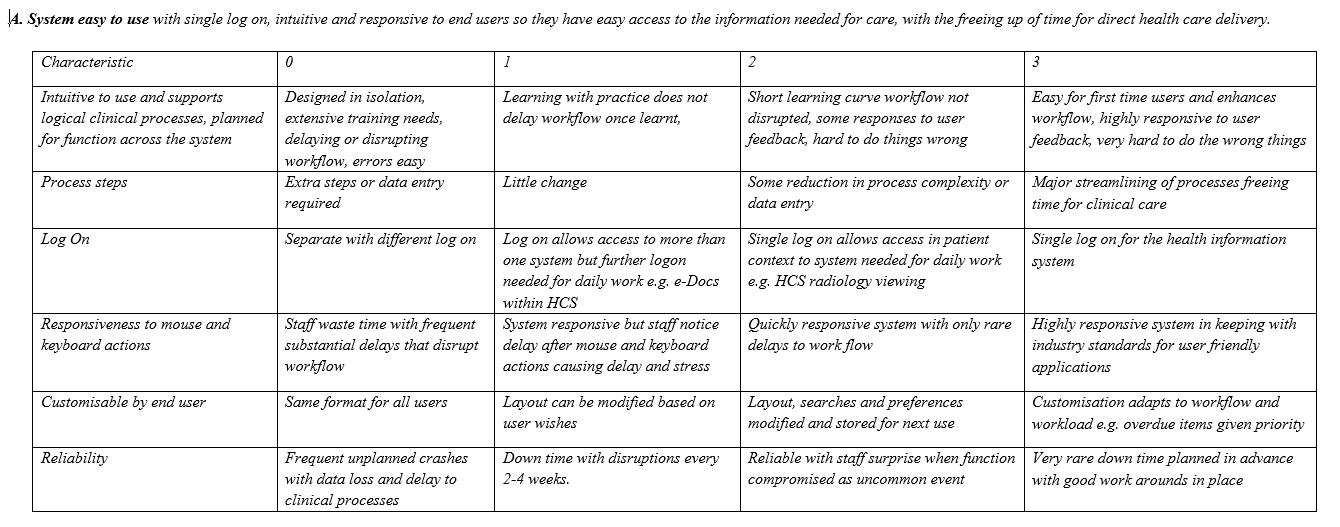
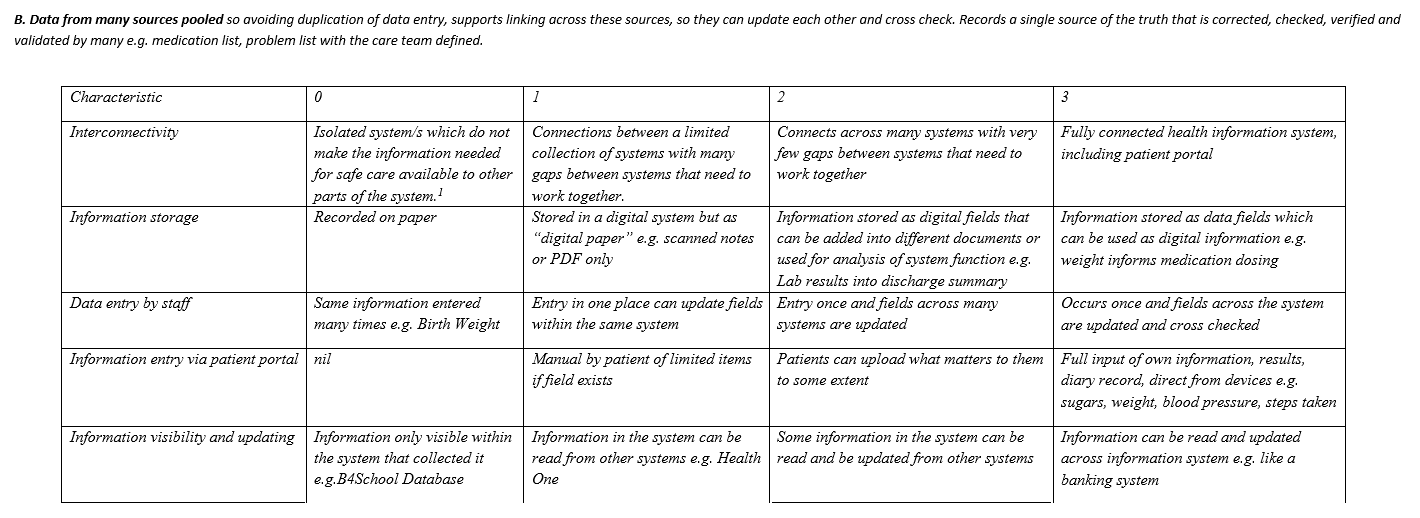
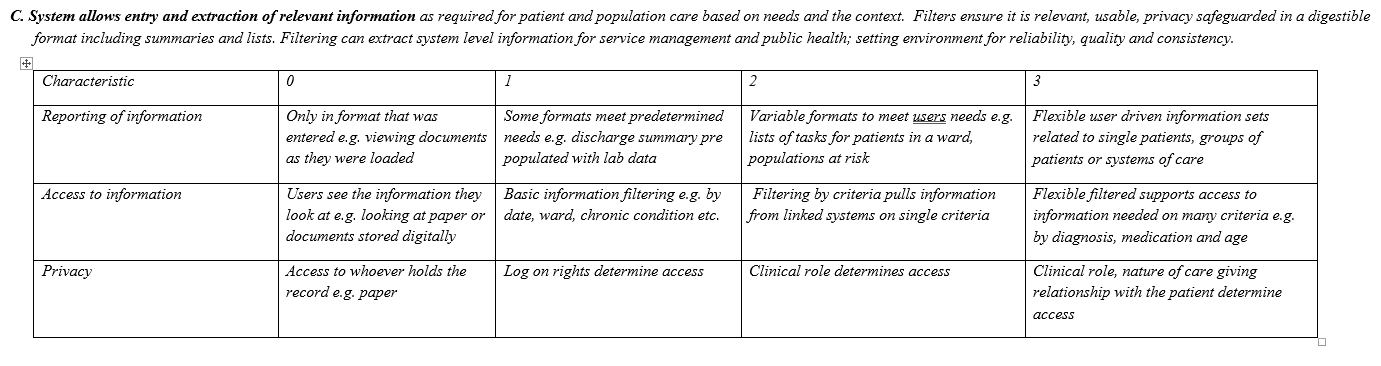
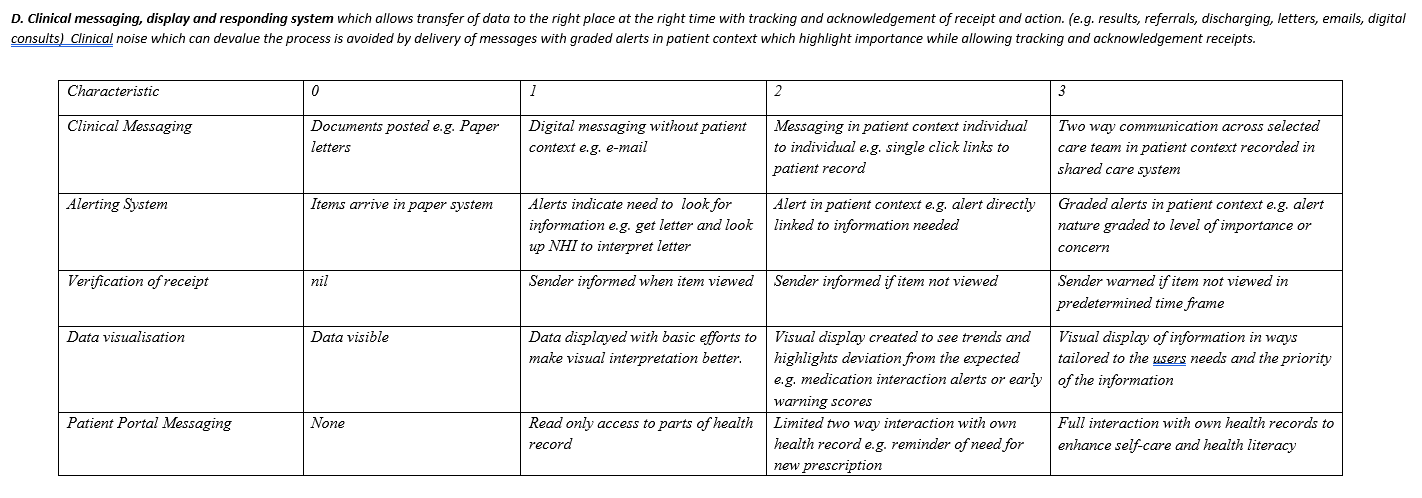
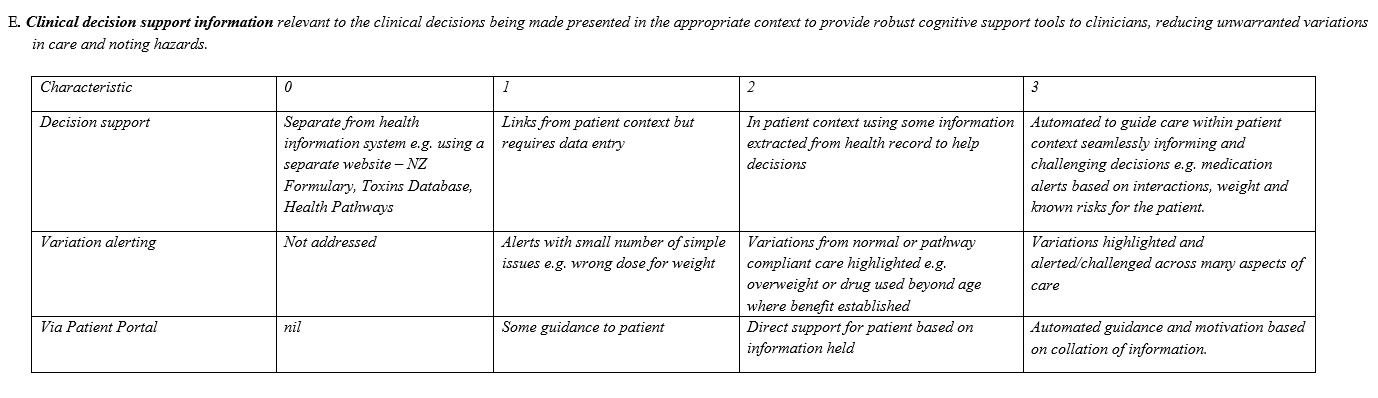
The scoring matrix below provides a checklist to help identify issues in any new software solution proposed for implementation and allows the tracking over time of improvements in usability and interoperability. If systems perform poorly with regard to usability and interoperability they should not be implemented until the issues have been addressed.
The scores should be based on connectivity and function from the view point of the patient and system staff primarily work from
Describes how IT connects to the business using the format of a novel, and introduces lean and TQM production methods in an IT concept - found it an easy and interesting read.
It is a great book and does highlight how far we are away from having a true Devops and continuous improvement / continuous development (CI/CD) framework in place for health IT. We will get there one day with containerisation and IAAS in the cloud, hopefully.
Looking forward to the sequel which is out in November
Actually Northern Region has started our journey on CI/CD with the Regional Clinical Portal project
Been an interesting journey so far – and will be happy to share with you what we have learnt along the way – fantastic help from the consultant hA brought in!
ROM and WDHB still just learning – but became obvious we needed a better way to do things with ADHB and Northland coming on board