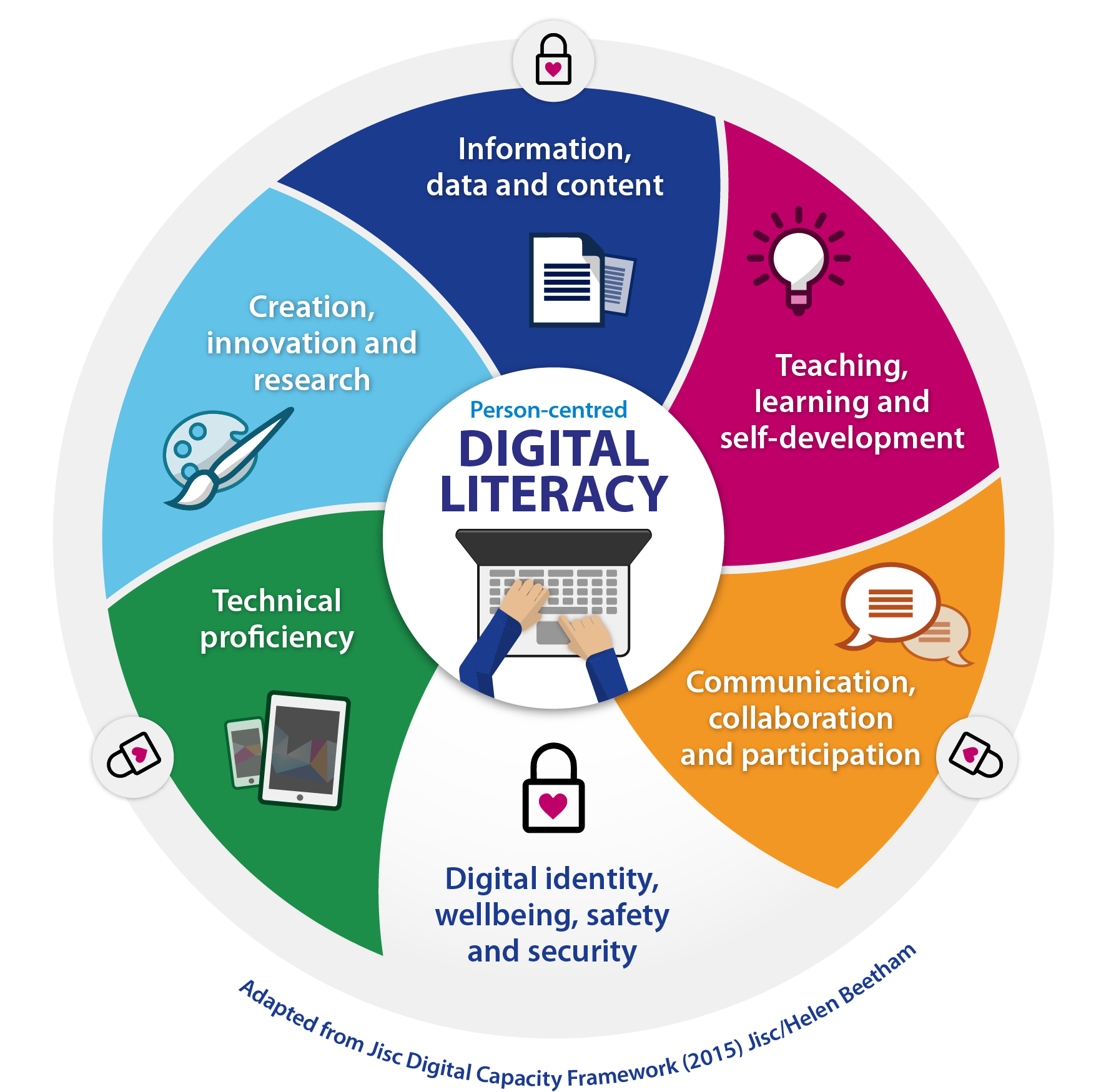
In your opinion, how important would an education service targeting the digital literacy of health workers be to the health sector?
- Extremely important
- Somewhat important
- Unimportant
- Unsure
0
voters
Digial literacy for the public equally important please
Hi
I think we need definitions here. What do we understand by digital literacy?
It is more important for us as informaticians to inform the industry on ergonomics, ease of use and seamless integration into clinical workflow.
I am not TV literate or automobile literate and I am definitely not cooker literate BUT I use all of this equipment with ease because of design.
How is it we go through immigration (but not at the moment!) or navigate Disneyland; it is because of investment in the physical and psychosocial training of people to use the systems we design, quickly and without in depth study.
If I wasn’t an informatician I would be expecting the digital systems I use to be straight forward and not interfere the process of caring.
Therefore I ask again what do we mean by digital literacy?
I think it is unacceptable for us to expect people to study, understand the content of, or be skilled at the digital concepts of health informatics BUT I do expect that the industry produces systems that fulfil the requirements of the profession to ergonomically supply the information to do the job in an efficient and timely manner so that I can care for my clients and not have technology get in my way.
So I think this poll is probably superfluous and we should be asking the political elite to pump prime the industry for standardisation of use a la motor car or TV remote!
What do you all think?
Couldn’t agree more! We have an opportunity, but it isn’t that broad.
True; if I had it my way our health software and hardware would be so intuitive and easy to use that digital literacy wasn’t something that we had to worry about. And yes, clinical informaticians worldwide have been advocating strongly for standardisation, clinical partnership, investment, and patient centricity. It is a very long term battle on many fronts. This is just one of them, but one I believe worth addressing.
Totally agree with all points made.
Judy
Hello,
We actually had a discussion about this at the University of Auckland medical school!
The link to the discussion is here if anyone is interested
I completely agree it is important to push for some digital literacy teaching but I think Dr Sapsford’s comment is valid as well. I think rather than talking about the importance of teaching digital literacy, there should be a discussion on what ‘digital literacy’ skills are missing in healthcare workers and how we can teach them.
I can see a driver diagram developing here . Firstly we need an “ aim” (outcome) statement that’s big hairy and audacious.
“Every New Zealander has a clear understanding of how anything digital that impacts and improves their health and wellbeing functions without needing significant additional tuition. Education provision and tools are intuitive and easy to navigate and delivered by December 2021.”
Primary drivers - Definition
- gap analysis
- Equity lens
- patient co design
- National standard - IT
-knowledge
- single literacy platform -HNav
- Funding
Secondary drivers ?
Grahame
To develop on David’s comments:
Hi
I agree with all the replies.
I suppose my point is that if we concentrate on the digital literacy trajectory (and I am not saying that the profession and the public should not have the highest education/awareness of digital health) what we do is divert the energy that needs to be spent on developing systems.
Financial resource is wasted on unwanted education (c.f. smoking cessation - couldn’t resist that LOL) when it should be invested in usability.
It also gives the excuse to our masters that we have to educate everybody first! (and thus delay the inevitable)
The process of monitoring development of software systems is objective. The return on investment and visibility of investment is apparent, whereas investment in literacy is almost ghost like I see no objective measures of success, uptake, enthusiasm or even if the money is there and not virtual. It seems to be spent on hot air! (Apologies to all the educators out there this is not personal, I was once a senior lecturer)
If we are to move forward we need targets, trajectories, and tests of success; it may not be six sigma like and more like the Cynefin approach.
We are a small country of very innovative people who could crack this problem and let the world look at us and say “Why didn’t we think of that” but to do this we have to get the “powers at be” investing in the TV remote not teaching the population electronics!
Apologies to anybody I may have offended, my passion is overt and my frustration painful!
Agree with David Sapsfords comment. Nobody went to a 3 h course on how to use a smartphone before they bought one.
We only need to train people how to use the systems because they are designed to be non-intuitive, minimally related to existing processes, and often create more work than the non-electronic workflow.
Just as an example when was any informatician engaged at the front end of development (?never) Software developers seem to think they know what we want and present it to us and then say “what do you think” and then it is a marathon to rejig the product to fit (because you can’t go back to the drawing board!).
Don’t get me wrong we rely on lone innovated developers implementing ideas, but it is a single idea that by definition will not fit the many.
What we need is boundary definitions in which to innovate (c.f. HL7 etc) not a free for all. This can only come from groups like us understanding the “real” use cases not the UML diagram representation that will be mal implemented.
Compare this with CDHB Design Lab, they build systems out of cardboard to fully understand the ergonomics of the space they are building.
What we need is the same for health informatics because as we all understand it is just not the software but the system engineering we have to get right.
With Covid we are at risk of the telehealth environment being unfit for purpose because of the rush to implementation (however it is being stress tested like no other system in health). We at Midcentral tried to innovate around telehealth (because of locality and deprivation concerns) little pump priming relying on evolution rather than revolution so little traction, and no innovation around the users needs. Then a virus changes the landscape and resource is made available in an unprecedented and uncontrolled fashion, if we had half of that resource 2 years ago we would have had succeeded in making a system designed for the user and not shoe horn commercial comms into a health environment!
Design lab starts with the user the citizen and the profession and designs for them; NOT with the product and educate the user to use it!
There’s more to the proposal than digital literacy. What is needed is a platform for professional development in digital/virtual/m/e/health rather than a simple tool that raises digital competence. Yes, clinical informaticians are more digitally literate than others, but if you want to transform how healthcare is done, you need your staff to know the basics like how to spot a phishing email, what their digital footprint is comprised of, the importance on not using someone else’s logon, and where the ‘on’ button is on your device (assuming you have one). This only solves some aspects of the usability problem, of which intuitive (user-centred) design is only one component. Attitudes and personal device skills as another aspect. )
I agree with you that the outcomes/effects of any education should be measured. What is missing in informatics is any professional development system that (1) finds knowledge/skill/competence gaps (2) enables education (3) tracks education and (4) evaluates the effect of education. We have it in the clinical professions but there is no central tracking/accreditation system of digital/virtual/e/m/informatics health. In the absence of a credible platform we have to create one. Over to you.
Thanks for this honest feedback and I am inclined to agree with you for many different reasons.
I am full time nurse working and witnessing first hand the resistance to change.
The intense frustration at having to incorporate another new programme that is clumsy and takes time. (You know, clumsy passwords, slow systems, time, the gripes are universal,)
However, every upgrade is eventually adapted to, the laggards are persuaded and supported by those who are tech savvy.
I think incorporating digital literacy/informatics into nursing curriculum or advocating the value of an additional module, will increase nursing workforce appreciation and acceptance.
Similarly, encouraging nurses to be at the table, involved in the deveopment of programmes to ensure ease of use and time management, will advance integration over time.
What would help would be encouraging nurses to upskill in the meantime (BUT not at their own expense!) and integrate remuneration incentives for undertaking education into the proffesional development portfolio.
Encourage voluntary upskilling initially, then possibly integrate into mandatory training.
Just ideas, to share.
Theres a lot going on in the work place atm
Work place stress is high.
Kind regards
Yes David I agree,
I had a zoom meting at university of Canterbury last Saturday. 4 teams of students presented their idea to working GP’s when they were at concept phase and this could be a model for the future.
I think we could step back further however to a situation where practicing Doctors could put up problems they would like solved and the teams could conceptualise a solution one for each team. Then we would really be talking.
To some degree HealthOne was based on this sort of structure though there was no competitive teams it was one team.
I fully agree.
However, if we are talking health informatics literacy for the informatician then this should be on a professional/guild like process, the metric of examination and productivity along the lines of the IEEE is the only way the assure the success and respect for the profession. We don’t know what we don’t know! I started in electronics/digital before medicine and did a couple of “micky mouse” courses in informatics in the 90’s; thought I knew it all! Only when I did a certificate in medical informatics (at City University) did I understand the scope BUT when I did an MSc at CHIME (UCL) then I really did fully understand the magnitude of how ignorant I was! (and probably still am)
But our colleagues and the public I think not, to take the previous example of the smart phone. There is a minimal knowledge base required and an awareness of weaknesses (security etc), but this can be acquired by the induction process (c.f. hand washing, cultural competency etc) it does not have to be a formal education process but a CME type competence, certification and maintenance process, proof of which maintains employment.
Hi Judy
Absolutely agree with your comments.
We are already covering health informatics at undergrad level, but for the nurses who have been practising for some time, it is w very new concept for them, and there is no specific training for them.
These are the guidelines for undergrad that we developed. The guidelines for RN’s is on the to-do list.
I am absolutely agreeing with you about having nurses at the table in terms of development. Nurses aren’t often involved with the development and planning of the incorporation of health informatics, but they are the majority of users, therefore need to be working on development and implementation.
Thanks
Emma

I think the recent acute pandemic stages in response to the emerging global situation and our systems various approaches have shown (hopefully to more senior leadership now too) how critical the skill sets of our workforce are, including the need to play catch up in digital skill sets. Some sensible thought is needed, not just for training but sustainment of models that work and can be adapted to each local context to ‘get the job done’.
Agree Ruth. There are some good digital literacy tools people can test themselves on. That gives them a baseline to plan their own digital development, and a platform for a conversation with their managers.
We’re still waiting for the final peer reviewed report on the digital literacy survey led by CiLN and the MoH. Am hoping this will come soon.



I fully agree with you.
The frustration I have with my medical colleagues complaining about systems when they use them infrequently, compared to the silent majority (nurses) who have to slog through these systems everyday (as if they haven’t got enough to do already).
If there was the investment to make I would take enthusiastic nurses through MSc courses in informatics and then plant them in the industry to get the systems engineering right!
But of course why did you become a nurse? To care right. It’s not our job to put it right but we do need to make sure the systems are fit for our caring processes.